
TL,DR: Vehicles with safety cameras require ADAS recalibration after a windshield replacement. Skipping it can leave your collision warning, lane departure, and braking systems working incorrectly. Arrow handles recalibration as part of the replacement process.
Your Windshield Is Part of Your Car’s Safety System
Most drivers think of a windshield as a piece of glass. In many modern vehicles, it is more than that.
If your car was built in the last several years and has any of the features listed below, this post applies to you.
- Forward collision warning
- Automatic emergency braking
- Lane departure warning or lane-keeping assist
- Adaptive cruise control
- Blind spot monitoring
- Rain-sensing wipers
These features rely on cameras and sensors. Many of those cameras are mounted directly to the windshield frame and point through the glass. When the windshield is replaced, those cameras need to be reset to their original calibrated position.
That process is called ADAS recalibration.
What ADAS Stands For
ADAS stands for Advanced Driver Assistance Systems. It is the collective term for the safety technologies that help drivers avoid collisions and stay in their lane.
These systems use cameras, radar, and ultrasonic sensors to read the road. The cameras behind your windshield are set to exact angles and distances established during the original vehicle build.
The windshield is a calibrated optical surface for those cameras. Small changes in glass position matter.
Why Windshield Replacement Affects Camera Accuracy
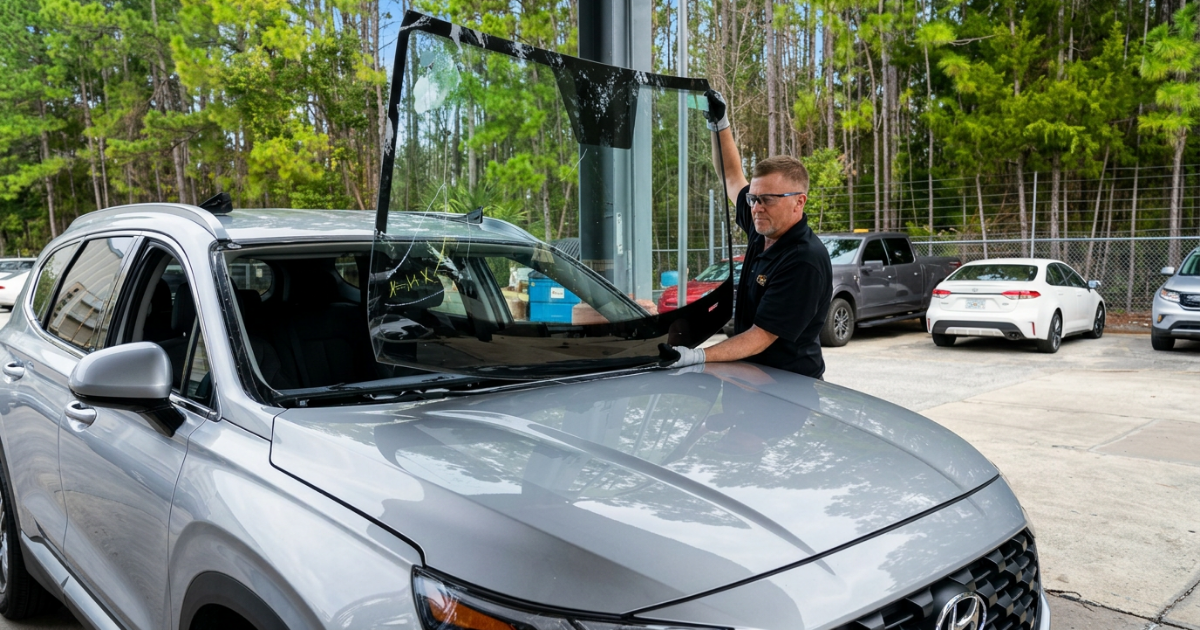
When a new windshield is installed, even a perfectly fitted replacement shifts the glass position slightly. New adhesive, new glass, and new installation tolerances all introduce small variations.
A camera that is even one degree off from its calibrated position can:
- Misjudge the distance of a vehicle ahead
- Draw incorrect lane boundaries on your display
- Trigger unnecessary emergency braking
- Fail to trigger braking when it should
- Provide inaccurate blind spot alerts
The last two are the most dangerous. A safety system that does not activate when needed creates false confidence. You may not discover the problem until the moment the system is supposed to protect you.
Two Types of Recalibration
ADAS recalibration comes in two forms. Your vehicle’s make and model determines which type is required. In some cases, your vehicle may require both types.
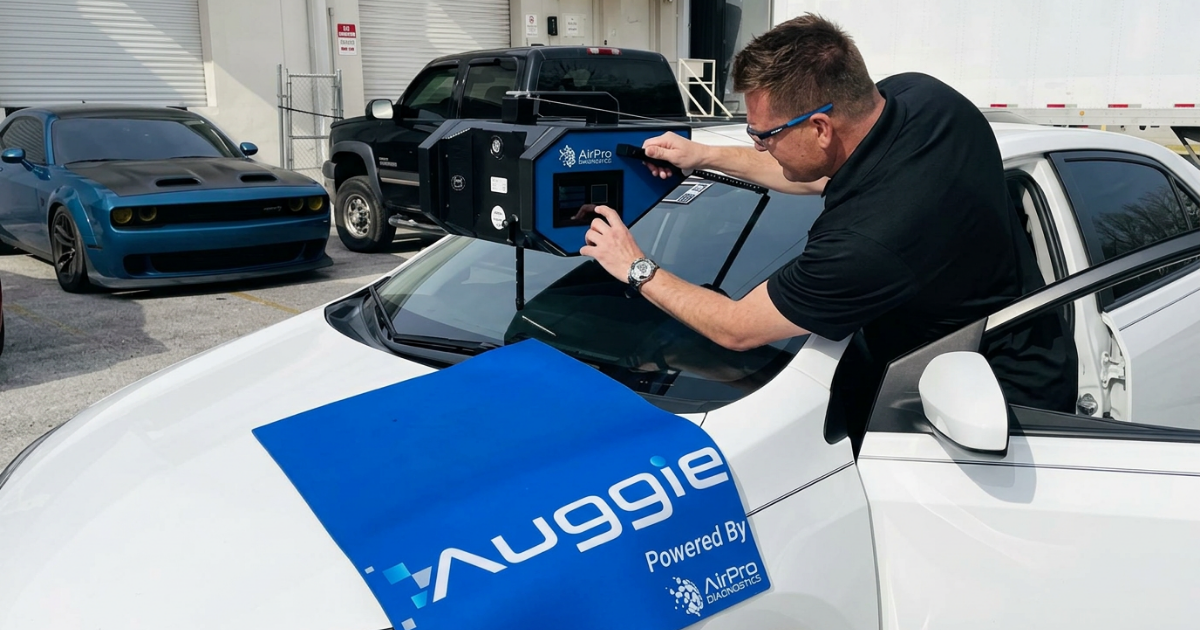
Static recalibration is performed in a controlled environment. The technician places calibration targets at specific distances in front of the vehicle. Diagnostic equipment aligns the camera to those targets. This typically takes 30 to 60 minutes.
Dynamic recalibration is performed while driving. The vehicle is driven at specific speeds on roads with clearly marked lanes while the system recalibrates. Some vehicles require both methods.
Arrow technicians are trained and equipped to perform both types. When you request a quote, the team will identify what your vehicle requires.
Which Vehicles Need Recalibration?
Not every vehicle has cameras that require recalibration after a windshield replacement. As a general guide:
- Vehicles built in 2016 or later with collision warning or lane assist systems almost always require recalibration
- Older vehicles without cameras or sensors mounted near the windshield typically do not
- Vehicles with only rain-sensing wipers or heated glass generally do not require recalibration
Arrow will identify your vehicle’s requirements when you call for a quote. You will not discover a recalibration requirement for the first time on the day of service.
What Recalibration Costs
Recalibration adds to the total job cost. General ranges for most vehicles:
| Type | Typical Range |
|---|---|
| Static recalibration | $250-$400 |
| Dynamic recalibration | $250 to $400 |
| Vehicles requiring both | $400 to $600 |
If your insurance covers the windshield replacement, it typically covers recalibration as well. Insurers recognize it as a required part of the service. Arrow includes it in your quote upfront so the total is clear before work begins.
Why You Should Not Skip It
Some shops do not offer recalibration. Some customers decline it to reduce cost. Arrow wants to be direct about this: skipping recalibration on a vehicle with ADAS cameras is a genuine safety risk.
Your safety system may appear to function normally. It may not throw an error code. But the camera may be calculating distances or angles incorrectly.
These systems exist because they save lives. A recalibrated system works as designed. One that was never recalibrated after a replacement may not work at the moment it matters most.
The job is not finished until the calibration is confirmed.
How Arrow Handles Recalibration
Arrow treats recalibration as a standard step in the replacement process for equipped vehicles, not an optional add-on.
- When you call for a quote, Arrow identifies whether your vehicle has ADAS camera systems
- Your quote includes recalibration if your vehicle requires it
- After the new windshield is installed and the adhesive has set, the technician performs calibration using approved equipment
- The system is verified before the technician leaves your location
If your specific vehicle requires a fixed-facility setup or does not have the newest software for calibration, Arrow will tell you that upfront and help coordinate the right solution.
Quick Answers
Does my car need ADAS recalibration after a windshield replacement? If your vehicle has safety cameras or sensors mounted near the windshield, the answer is almost certainly yes. Arrow confirms this when you request a quote.
What happens if I skip ADAS recalibration? Your safety systems may work incorrectly without triggering an error. They could fail to detect hazards accurately. This is a real safety concern, not a formality.
How long does recalibration take? Static calibration typically takes 30 to 60 minutes. Dynamic calibration involves a short drive. Many vehicles require only one type.
Does insurance cover ADAS recalibration? In most cases, yes. If your insurer is covering the replacement under comprehensive coverage, recalibration is typically included. Arrow handles the claim details.
Can any auto glass shop do ADAS recalibration? No. It requires specific diagnostic equipment and trained technicians. Arrow technicians are certified and equipped for both static and dynamic calibration across a wide range of vehicles.
Book Your Windshield Replacement and Recalibration
Call 866-975-4527 or visit arrowautoglass.com. Arrow will identify whether your vehicle needs recalibration and include it in your quote.
Key Takeaways
- ADAS cameras require recalibration after any windshield replacement on equipped vehicles
- Even a perfectly installed windshield can shift camera angles enough to affect system accuracy
- Skipping recalibration can leave safety systems working incorrectly without any warning light
- Static and dynamic recalibration are the two types; your vehicle determines which applies
- Arrow includes recalibration in your quote upfront so there are no surprises
- Insurance typically covers recalibration when it covers the replacement
- Arrow technicians are certified and equipped for both recalibration types